Archive

Uncategorized

When I was a student in France and practicing interviews to get into business school, I was drilled by an older student who had already got into business school and exuded the self confidence of someone who doesn’t realise he knows very little. He asked me why I wanted to work “en entreprise” – for a company-, and what kind of company. I answered I’d want to work for a company with a soul, with a clear purpose. He stared at me as if I said “I want to be a flower girl”, then proceeded to explain that wasn’t the kind of thing to say to get into business.


So I was very happy and relieved when I recently read “Conscious Capitalism” by John Mackey, founder and CEO of Wholefoods, where he explains companies have obligations to all their stakeholders – staff, suppliers, customer, local authority (taxes and compliance…), central authority (axes and compliance), neighbours, the environment…-, not just their shareholders, and that while making money is a condition to be sustainable, it isn’t the purpose of a company, that there should be a vision that serves the greater good. Whole Foods sells high quality organic food throughout the US, its products are expensive, but then maybe quality is better than quantity, and suppliers get properly paid for their produce. It employs 91,000 people, and had a turn over of US$15bn in 2016.


Capitalism has made such a bad name for itself, fingers have been pointed at it for being the cause of greed, excess consumption, pollution, reckless destruction of the environment. Yet many entrepreneurs have made invaluable contributions to our quality of life. Ford and Volkswagen wanted to build cars for the people, to enable everyone, not just the monied, to be able to go to the countryside on week-ends with their families and have more independence.

Apple wants to help people connect, and every Apple technical person I’ve spoken with lives and breathes that idea, they know the product, they’re enthusiastic about it and have spent hours on the phone with me trying to solve problems.


Check out any company that is appreciated by its staff, suppliers, customers, and you’ll usually find behind it a clear vision, usually led by an individual who has formulated that vision. Sell that company to a corporation who only sees ways to sell it on at a higher price, or to maximize profit, and you’re likely to lose the vision, and the ability to adapt to a changing environment while keeping your eye on the company’s higher purpose (which isn’t to make money).


Unfortunately John Mackey has done just that and put himself in a situation where he has been pressured by a new investor to sell out to Amazon just last week. It’s a lucrative operation for the shareholders, Whole Foods sold for US$13.7bn, but it will be interesting to see if the company will manage to keep is commitments to top quality food and respect for suppliers and customers.


The Body Shop grew and thrived on Anita Roddick’s desire to produce skin care products with a social and environmental awareness, and when she sold it to L’Oreal in 2006, she said it would be a Trojan horse, and would help make changes from within the large multinational company. L’Oreal did stop testing on animals in 2013, but Body Shop seems to have lost its way, and profits have dived.


It is ironical that someone considered as the father of capitalism, the Scottish philosopher and economist Adam Smith, wrote about sympathy (which we can understand as the present day ‘empathy’), and humans’ need to look after each other, in “The theory of moral sentiments”, yet he is often quoted as a source to explain why the well being of employees, customers and suppliers should be sacrificed in favour of maximizing profits for shareholders. Have his ideas been hijacked and reinterpreted to justify privileging shareholders over other stakeholders?


It is a fact difficult to contest that most companies can serve a higher purpose. Construction companies can build safe and comfortable houses for us to build homes. Clothing companies can make our bodies warm and possibly even beautiful. Cosmetic companies can help our skin be healthy. Cement plans can give us the material needed to build our houses, etc, etc.

Even banks – those companies so vilified in the press because of high bosses being paid large bonuses sometimes at the tax payers’ expense – serve an important purpose: enabling you and I to set up our own business and grow it.


When the Bangladesh based Grameen Bank started giving loans to impoverished women in the 1970ies instead of giving them money, it was considered immoral – how were they supposed to ever pay it back, and worse still at an interest rate of up to 18%?!- It’s only when it turned out they did pay back, and thrived on the businesses they started, and had a much better pay back rate than the fat cats who had contacts with senior managers of commercial banks, that the world of development realized how powerful people’s sense of entrepeneurship was. They just needed to be given half a chance and a tiny bit of capital.


So why this niggling feeling that companies’ intentions are impure, that they’re in it just for the money, and will take shortcuts when it comes to the staff, the customers’, the suppliers’ interest. Because often, they are.


There seems to be a worship of shareholders in board rooms, and maximizing their profit. Nothing matters but the bottom line. How sad and boring. Money is way over-rated.  It makes life easier, but it’s the other things that make life fun and interesting and worth living: creating a family, a wider community, fighting to build something that benefits many people.


Also, if and when all stakeholders are aligned on one vision, staff, suppliers, customers, shareholders, that’s when everyone becomes really creative, and the sum of the parts becomes a lot more than everyone taken individually. Also, it’s easier to ask for sacrifices when times get tough, if every member of staff, every supplier, every customer, feels they’re in it together, and will benefit together when things improve. Instead of having a polarization between management and workers, with strikes and everyone trying to take the better of the other party.

It is a shame that often staff are considered a ‘necessary evil’ (true quote from a CEO), and any suggestion to make their working lives more rewarding, or to give customers a bit more  for their buck is considered suspiciously, as if there was a risk of becoming too sentimental, and the company collapsing from being too kind to everyone.

I’d argue the opposite is true. If your working partners (staff, client, suppliers, local authorities, neighbours, etc…) are dedicated to your mission mind, heart and soul, there is no limit to what can be achieved. I’ll define heart and soul here, I don’t want it to come across as some hippy talk disconnected from reality.

Work done with heart means it is conducted with empathy for everyone involved, as well as for the environment. There is a clear sense that the company has a purpose, but also that many different parties need to be taken into account and not suffer from the work done towards that purpose. A ‘conscious’ company is a guardian of the environment, fights wastage and excess packaging, instead of being a threat to nature and its natural processes.

Work done with soul means there is a sense of a bigger picture, a knowledge that the company helps improve lives, in whatever way (it can be as mundane but crucial as emptying sewage tanks), and that the job gives satisfaction in itself, regardless of the pay.

So it is a welcome development in my mind that there is a change in thinking from companies being tools to make money for shareholders to them fulfilling a much bigger and more interesting role in society.

The movement “Conscious capitalism” around the world is a place for entrepreneurs to share these ideas and further them.


In France I just heard the term “entreprises à mission” – enterprises with a mission-.

I was talking with a friend fund manager about social enterprises – enterprises with a clear social benefit-. She countered that she hoped every company she invested in was socially aware, and helped better the lives of its staff and every other party involved-.


After all, companies are agents in our society to provide goods and services we need. Just like an organism needs healthy organs to sustain it, so we need healthy companies to listen to the needs of society (real needs, not made up ones), and fulfill them.


I used to think that rational thought was the best tool to use to make decisions in life, big and small. I would stay awake for hours when big decisions had to be made, weighing all the pros and cons, anticipating the likely outcomes of every move, and estimating what move would bring about the biggest benefits.

Not now. I’m still a novice at this, but I’m experimenting with a different tool: intuition. Actually, I’m really enjoying the idea that I don’t have to spend hours plotting out all possible outcomes, rather just relax in what is now, and trust my intuition will guide me as and when needed. It is a total act of faith. Like driving out on a road when a car is coming with its indicator on, and trusting it will indeed turn and not crush into me when I pull out.

Actually, better than that, I feel like a secret agent who only gets her instructions on a need to know basis, with no clear idea of what the overall operation is, but knowing that some higher intelligence is at work and gives the best instructions possible.

From an experimental point of view, intuition is the tool that has served me best. The best outcomes have been those guided by intuition. Even when there’s been pain and hardship along the way, it has turned out there was a reason for those, and they were strong learning experiences.

The key to using this tool is that I need to FEEL, rather than THINK. That’s been a tricky one. It has meant un-programming myself from years of being told by school and society that reason is the supreme tool for living one’s life.

I do think reason has an important role to play, but it is in implementing goals, not in fixing them. If intuition is the rudder on a boat, reason is the sails that propel it forward. Allowing the sails to guide the boat could take you to some disastrous places.

Feeling allows me to take in a lot more than my rational mind can. It seems to tap into an intricate network of all the desires, wishes, fears of the people around me as well as my own, beyond any pretense or show they/I may put up, and work out what serves them/me best. It is not a verbal process, it can’t be articulated. It is a Knowing.

Actually, the more I give up on wanting particular outcomes, the more the feeling increases. And there’s a huge, beautiful landscape of feeling, right here, at my finger tips – grey feelings of sadness, yellow-dark grey feelings of grief, vibrant reds of life bursting, soft pink and ochres of tenderness, bright green and indigo blue of love and connection, etc-

The intuition comes as a deep quietness once the feelings have sorted themselves out, fought for attention, spent all their energy saying whatever they had to say. It can take months, or it can take seconds, the only thing that is certain is that they need to have their say, they need to to be able to burst into my life like a child needing attention, and I need to give them full attention, often making me  smile, or cry.

I’ve had to accept that odd feelings pop up at unexpected times. And just let them come in, always giving them a warm welcome, whatever they may be. They always leave too, none have overstayed their welcome. Some come back rather incessantly, but I have learned that if I let them in graciously, they leave graciously before I get really tired of them.

Coming back to intuition, my beloved husband, who claims to be a very rational person, quipped recently at me when I suggested he could slow down and appreciate the beauty around him “of course, you think you can just trust the universe to take care of everything”. Hah. That’s a big one: it’s OK for me to do my yoga, and play with thoughts of love and trust, when he’s working his socks off to make sure we’re provided for, and actually provides for not only our family of 6, but his family, my family, friends when needed, staff of projects he’s invested in. Indeed, it’s his incessant fear of the future and of the disasters that may happen (it’s just a matter of time, in his mind, before they do) that have motivated him to build an asset base to make him feel he and his loved ones are safe (a feeling of safety which of course always eludes him, no matter how big the asset base).

Maybe I should just be honest with myself and answer back “yes, the universe will take care”.

What if there is an incredible intelligence out there that is available for us to tap into?

Isn’t that what Jesus did when he retired in the desert for 40 days – trying to enter in communication with this higher intelligence?- Or was he working out all the moves he could chose to carry out in order to bring Love to the world, like a chess player, rationally working out outcomes, discarding those that would work well, and keeping that which was the most promising?

I would argue he was tapping into a higher intelligence.

Isn’t this the teaching of St John’s “Wedding in Cana”? Jesus reminds the organisers of the wedding that they need only trust, and God will provide.

We hear this parable often, at weddings, confirmations, and yet we don’t allow ourselves to trust.

Maybe because we are too attached to particular outcomes. “I need to have a husband who tells me I’m beautiful in order to feel good about myself”, “I need to have a job that guarantees me a monthly income before I can feel safe”, “I need to have a child to feel fulfilled”….

Maybe we can open ourselves to the possibility that these outcomes are insignificant compared to what a higher intelligence has in store for us.

Now for intuition and women.

WHY WAS I NEVER TOLD THAT MY INTUITION RISES THROUGH THE ROOF WHEN I HAVE MY PERIODS?

I was prescribed the pill when I first started needing contraception, I was put on a morena coil after I started having children, it releases hormones at small doses in the body, and when I finally took it out, my moods went haywire, it took a year for them to stabilize.

I have only just learned to appreciate, just when my periods are about to disappear, that those few days when I am in my “moon time” my body tells me to slow down and feels so much more strongly. Everything that is not quite right in my life feels so much more uncomfortable. Everything that is not aligned with who I am, with who my loved ones are, shouts out.

Isn’t this an amazing gift? To have a tool that tells me what needs addressing? It is not a time to make decisions, rather a time to tune in to this higher intelligence that says “this is right”, or “this is wrong”.

I recently learned from a Navajo lady that in her culture women in their moon time are honoured and respected for the deep insights they have then.

Do the medical bodies realise the damage that is done when they administer willy-nilly hormonal contraception to women, many for most of their lives?

Maybe because many doctors are men, they have no idea about the gifts of women’s complex hormonal cycles.

I feel there is a whole body of work to be researched on how women are attuned to life’s creative process, to their instincts to create life, nurture it, protect it. It’s in their physical make up. They create life (in all ways, not just having babies), and yet they have been led to believe their female attributes are inferior to men’s. Their moods irrelevant and dangerous.

I believe it is time to come back to a mode of functioning where we feel more, and allow ourselves to be more attuned to our environment. More in our hearts and bodies, less in our brains. We may then stop working so hard for things we don’t need, and realise everything we ever needed is right here already.

I’m a survivor.

I might not look like I survived any massive ordeal, and no, it wasn’t cancer. Yet, it caused me to not function at all for a few weeks, and function only barely and get through only vital duties for a lot longer. Had I been hit by a lorry, the pain wouldn’t have been greater, yet there was nothing for anyone to see.

I know the danger is still there, but I’m learning to manage it better.

What happened was, I came face to face with my demon.

Maybe you’ve faced your demons already. Maybe you don’t even know about your demons.

I’m grateful mine eventually showed its face, because I finally knew about it and had a chance to deal with it. It had controlled my life, made it much sadder and smaller than it could be, and I had no idea.

All my life I had felt inadequate, lonely, and tried hard at everything I did, in the hope one day I’d feel I was good enough. Good enough to feel loved.

Until I collapsed from exhaustion and couldn’t function any more.

Then came the hard work of confronting the dark side inside me that had been holding me back. The programming that had made me always try harder, and yet never made me feel content. It’s like peeling an onion. One painful feeling or memory comes up. Tears flow, then subside, and healing comes. Then another shadow appears, another painful feeling. One after the other, after the other. Now I don’t even expect it to ever stop. But I do slowly slowly feel bigger, freer, more joyful.

My demon does show its face regularly, especially when I’m tired. ‘You’re so useless, you said you’d do this today, and you didn’t even get round to it’. But now I recognize it, and can answer back: ‘yes, I am tired, it doesn’t make me inadequate, actually, I’m pretty cool and fine as I am, I’m just going to have a little rest, then I can start again’.

At the end of the film “A beautiful mind”, the mathematician John Forbes Nash (acted by Russell Crowe) receives the Nobel Prize (all true story), and sees in the crowd the three imaginary characters created by his schizophrenia. He accepts he sees them though they don’t exist but he doesn’t feel threatened by them any more.

That is how I’d like to keep my demon: safely in the spotlight.

Now I’ve just spoken about this demon casually, yet it has been the scariest, most painful creature I’ve had to deal with in my life. Delivering babies without pain killers, a marathon, they were a walk in the park in comparison.

I have felt above the abyss, falling into a hole with no bottom, with no hope, just sheer pain, a pain of feeling disconnected, of not belonging, of not feeling good enough to belong.

However, what they say is true, if you stay with the pain, if you completely let yourself be taken by it, the wave eventually washes you up on the shore, feeling calm and safe.

The body comes with demons, but it also has an inbuilt mechanism for dealing with them.

The thing is, one has to look at them in the face. I could have taken anti depressants. Or pushed the pain away and tried to ignore it. But I really wanted to get to the bottom of it, deal with it as thoroughly as I could.

It doesn’t really matter how it’s done – anything where you allow yourself to see inside yourself, by yourself or accompanied. It could be writing, running, playing music, any form of healing or therapy or mindfulness practice. In my case, kundalini yoga has become a daily practice.

The added bonus is that not only do I have my demon squarely on my screen now, I have also been able to open up. I must have been too scared of being hurt before, I protected myself behind a wall. Now the wall has been lowered, and I can allow so many wonderful people and events into my life.

They’re strange things, these demons. They warp reality to such an extent that they give you fear where everyone else would agree there is no reason to fear.

Audrey Hepburn never felt good enough, yet what a model of grace, beauty and love. Her son Sean wrote “I can see her in the kitchen, preparing something wonderful. She really tried so hard, on every level, to please, be happy, be loved”.

Another demon is the fear of the future, of being hungry, of not having enough to pay the bills. It doesn’t matter that you have a secure job, savings in the bank, if you have that fear, a very real fear, you will fret. You might feel you need to control things and people around you, because the fear of what might happen if you don’t is just unbearable.

Yet another big one is the fear of death. The thought that it will all end, that people around you will disappear. The fear with every physical ailment that ‘that’s it, the end has come’.


It is tempting to blame the world for being wrong, but at the end of the day, it’s easier to change one’s programming and unmask the demon than change the world around you.

Nothing weakens a demon as being exposed, and it’s uncanny how people’s attitudes around you change as your demon weakens.

I had felt bullied and victimized, until I realized I had been my worse enemy, and called for that situation by always feeling I had to do more. I have now discovered that ‘no’ is a perfectly good answer.


Do I wish for everyone to unmask their demons? Yes, for there is such a fuller life to live if they’re tamed. But, it is no easy journey. It is more like Ulysse’s Odysseus. Maybe we don’t have a choice though: our demons are here, in the dark, acting on us whether we want it or not.


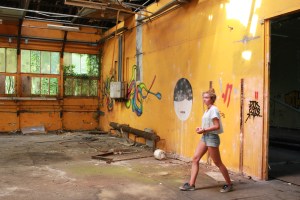
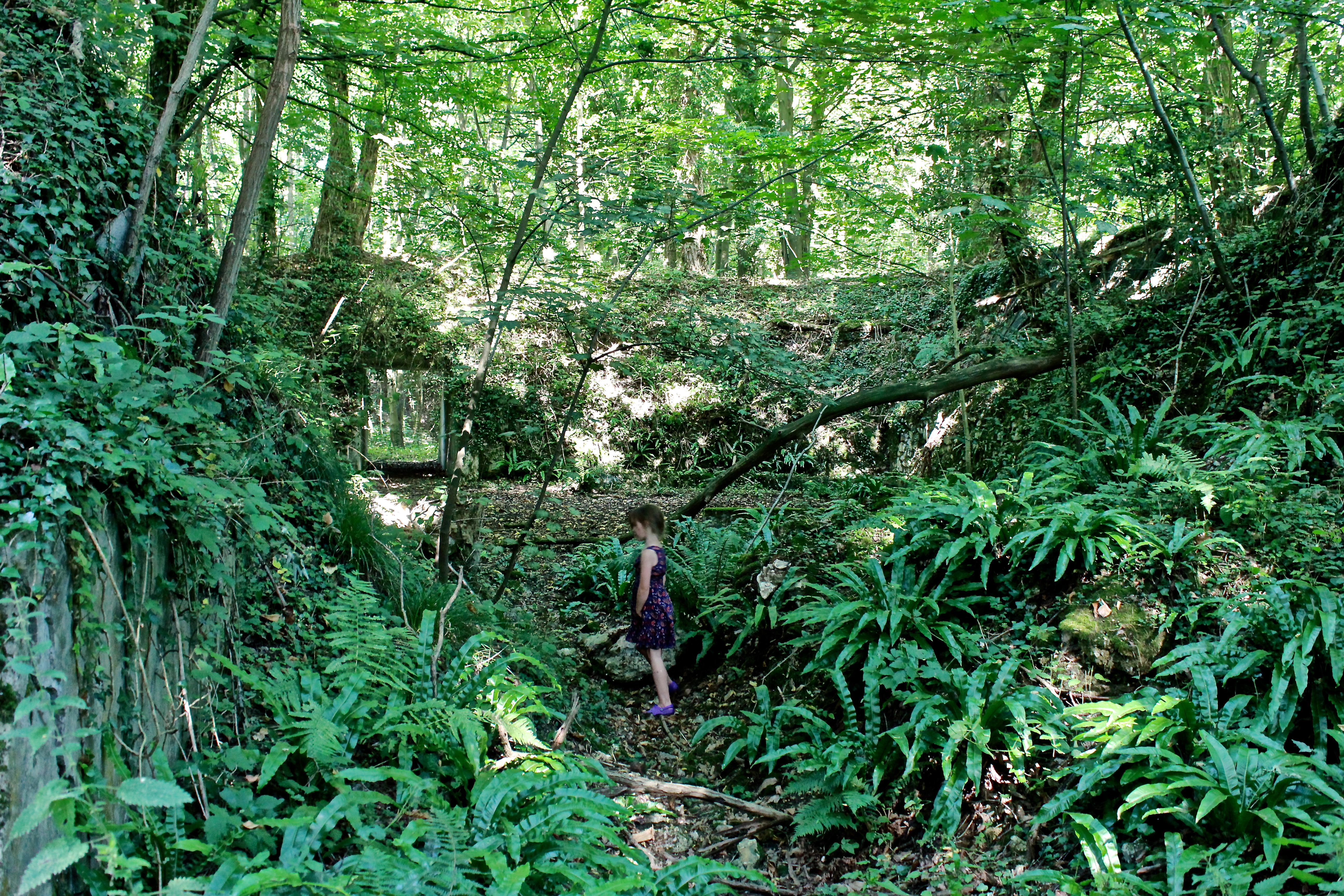
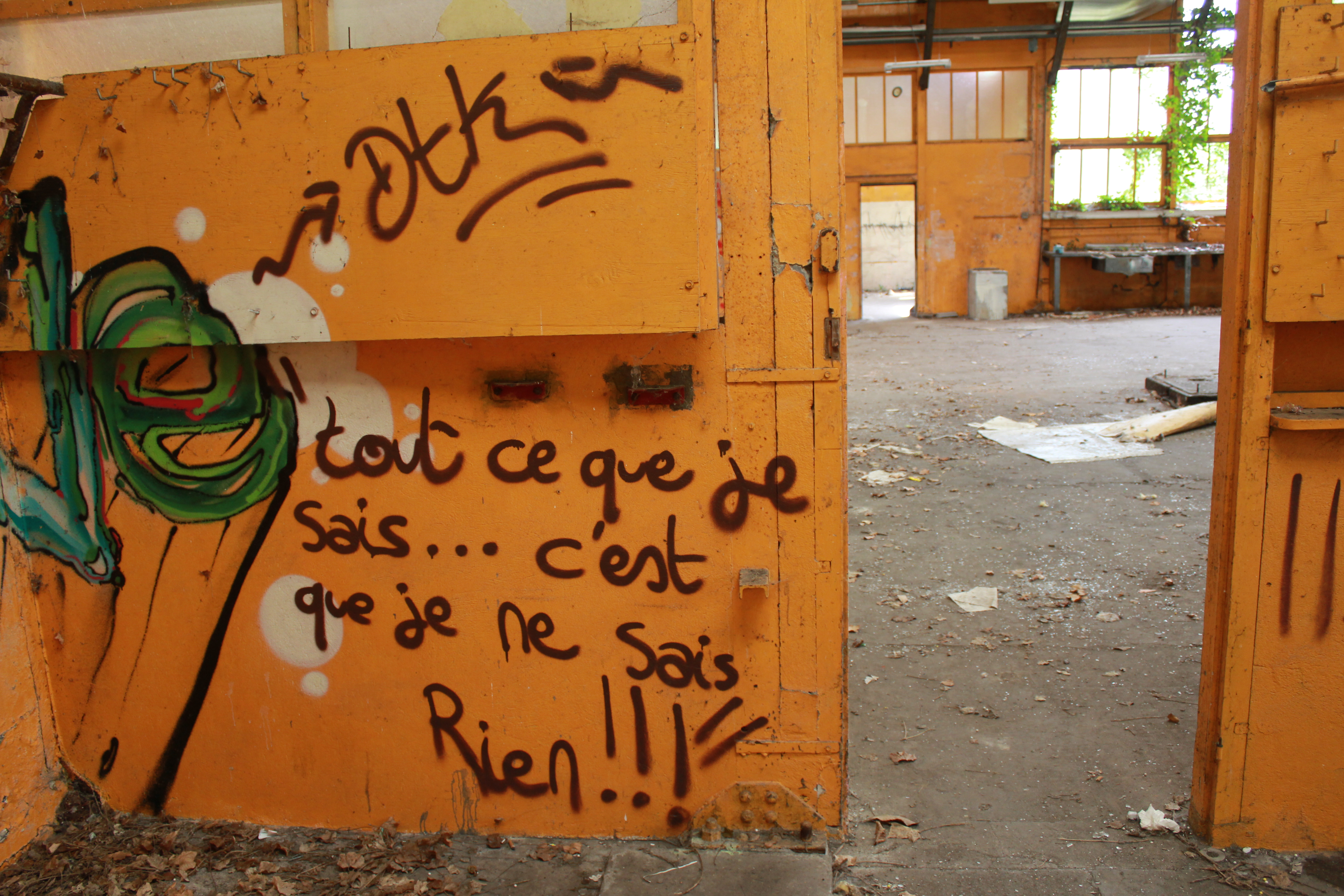
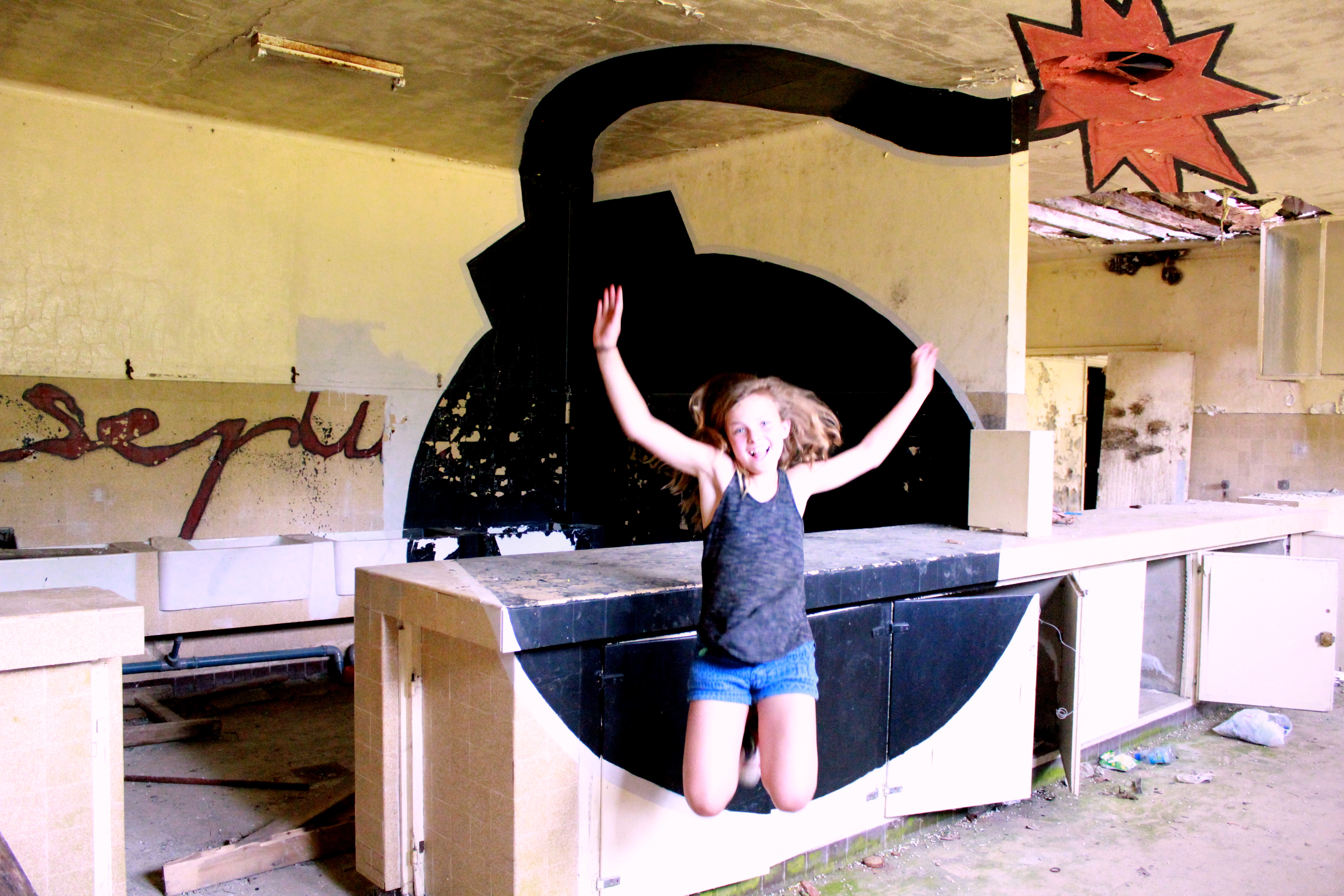
IMG_9392 IMG_9396IMG_9401  IMG_9398 At breakfast time on March 3, 1988, a workshop exploded in the Nobel Bozel dynamite factory where my father worked as maintenance engineer, killing five people, all the top executives except my father, who by some miraculous chance had forgotten some papers and was out of the workshop when it happened. My brother and I, his wife and our daughters went to visit the factory last Sunday. The gates had been closed for 27 years, and somehow have been broken open a few weeks ago. It was like entering Sleeping Beauty’s castle, completely overgrown with lilac and birch trees growing out of roofs and windows. Incredible graffitis covered the walls. The Nobel company must have decided the cost of decontaminating the land was more than the real estate value and will have forgotten it as an unproductive asset in their books. A guy in military clothes walked out of the derelict office building when we passed the gates: a paint ball game was under way. They stopped it while we walked around, in wonder. We finished with the office, where we found papers in my father’s name, and signed by him, left undisturbed for nearly 30 years… My father never really spoke about the explosion, the shock of losing his colleagues and having to recognise the bits of body and assist the enquiry must have been a heavy burden. He also had to go out and find another job at age 50 (as the factory was closed), but being the strong person he was, he moved on. Without really discussing it, we had always assumed it had been criminal: an explosion had killed three workers three years earlier, and there was an uncomfortable atmosphere between workers and the executives, fueled by some virulent communist propaganda, where the “patronat” (employers) was accused of putting people’s lives in danger in the name of profit. Death threats against my father and his colleagues had been issued several times. Considering how staunchly socialist my father always was and how he cared for everyone working at the factory, it must have been mortifying. What we have started to realise only recently is how dangerous the process of making dynamite was, these factories don’t exist any more, the ingredients for making dynamite are now assembled only when it needs to be used to limit the risk of untimely explosion. The real miracle is that there were no more accidents. So maybe it wasn’t criminal after all. There was nothing left after the explosion, so very few clues anyway, and little desire from any party to spend more time investigating further. What is left is a strange world of wild flowers and jungle, broken roofs, and a human fauna of paint ballers and scavengers. Cf http://www.ouest-france.fr/personne-na-oublie-les-usines-nobel-1053703
IMG_9416

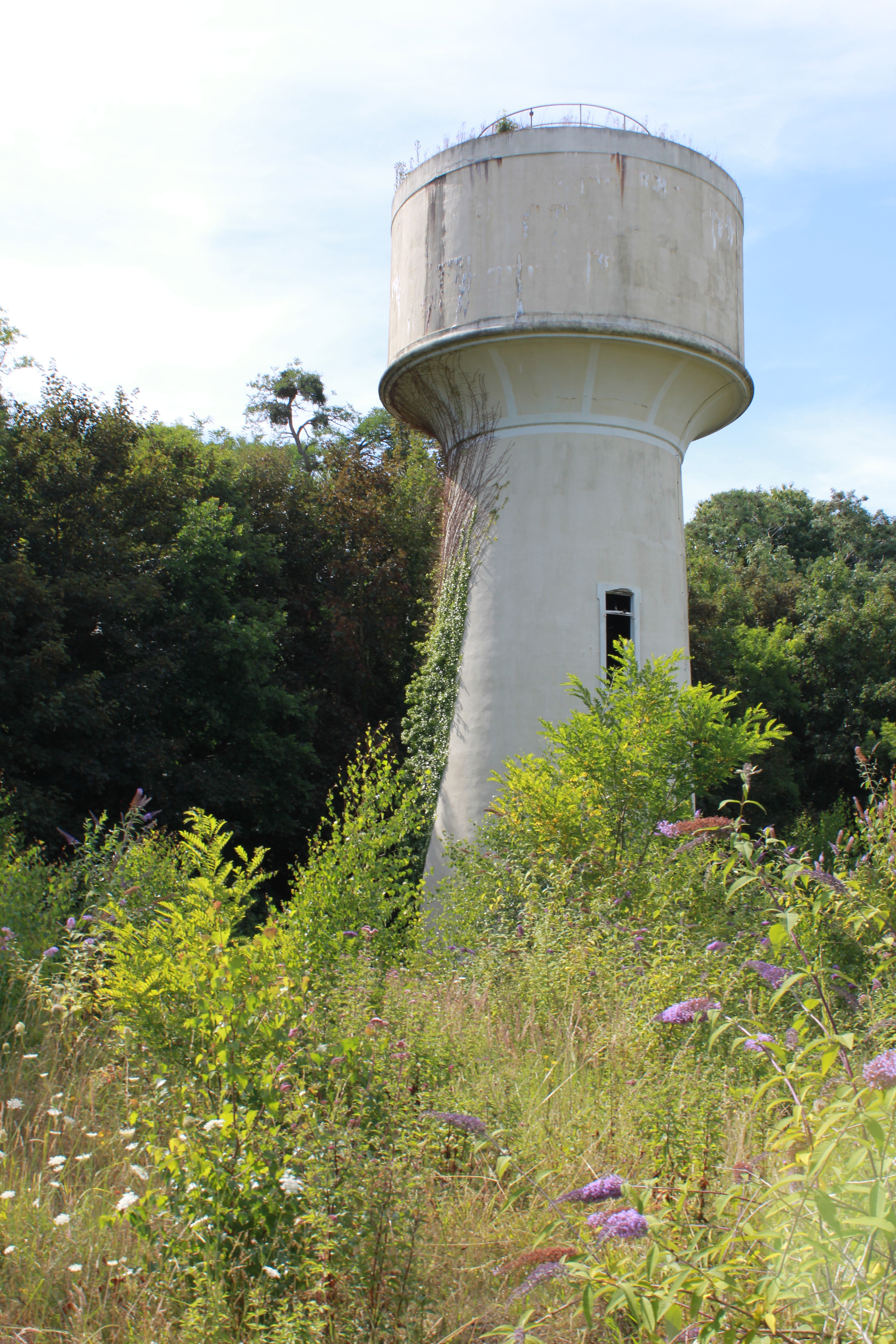
The water tower in which my father fell one Sunday as he was checking the water level. It took him hours to climb up a rope that was fortunately dangling from the top. He came back home with bloody hands, but alive.

IMG_9490

Was this the workshop that exploded? Who knows… Vegetation has taken over everywhere and broken all the walls.

IMG_9473

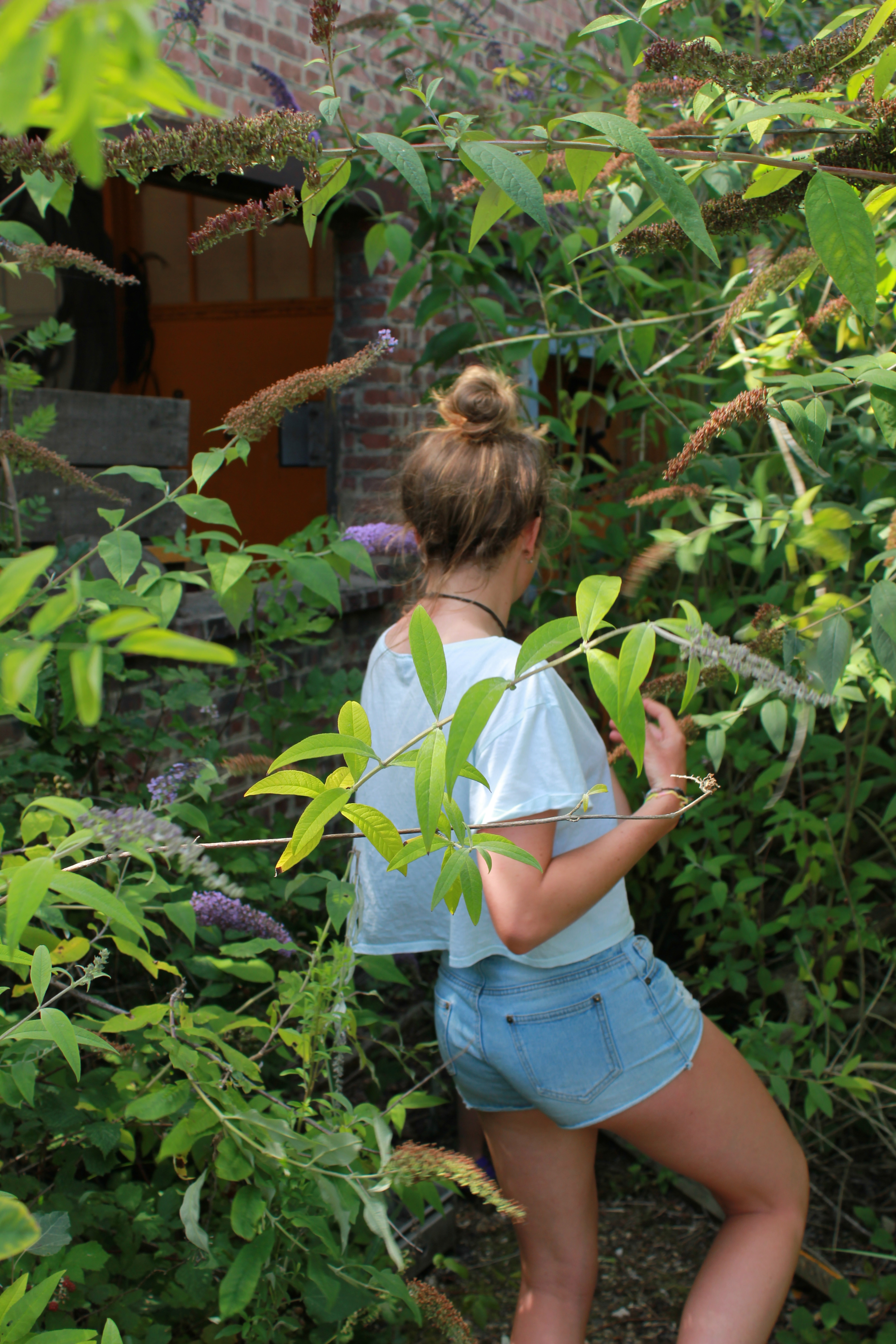
Another miracle: lilac is growing everywhere – it was my father’s favorite flower!

IMG_9479

My father must be smiling in his grave, seeing his grand daughters walk around his offices!

IMG_9409 IMG_9410 IMG_9438 IMG_9447 IMG_9465 IMG_9471 IMG_9486

I have to confess to a rather strange belief. Actually, it’s rather like believing in magic, and I squirm a bit writing about it, as if I said I believe in tooth fairies or Father Christmas. But I still want to share it, I’m curious to find out if other people have the same experience.

I find that if I have a daily spiritual practice, I tap into a wider wisdom that guides me in a way that works for me as well as for others around me.
Over various periods of time in the past, I have practiced transcendental meditation and reiki, but for the past four years I have turned to kundalini yoga, and for me it seems to work at a faster rate.
Every morning I get up between 30 and 90 minutes before my day starts, and practice physical exercises, or sets, and meditation. I’m very disciplined, I’d rather miss out on an hour of sleep than an hour of yoga. I’m taking no chances: I’ve been in a place where I felt completely disconnected from myself and didn’t have any meaning in my life in spite of all the obvious signs of success, I’m not going back there in a hurry if I can help it. And I’ve been observing some positive changes within myself, but also around me. And I’m slowly coming to believe what our yoga teacher Hari Har Ji said at teacher training last year.

That if we connect ourselves to our inner voice, or intuition, or higher self, whatever you want to call it (you might even call it God), we tap into a very elaborate stream of wisdom, an organic intelligence. One that connects everything and everyone, in the same way as ecosystems are all inter-related in nature (as we’re only starting to understand).
This wisdom is far greater than we can ever comprehend, it’s not even worth trying to grasp it, it’s only looking back that we can start to understand why and how things unfolded.

And the more I let go and allow intuition to guide my life, the more things seem to fall into place for everyone’s benefit. It’s a huge act of faith. I have to trust this inner voice when it tells me to make decisions that can be scary, or even painful for myself and others. Some have been very painful. But it felt right, and there’s nothing like the calm and serenity that come with the feeling that something is right. It feels like being in the centre of oneself, no matter if there’s a maelstrom going around that centre.

The other strong feeling that comes out of this morning hour of yoga is a feeling that we all belong to something bigger, effectively, that we’re all loved for who we are, and that this something bigger than us will help us be whatever we are. In the same way as oaks are needed to the ecosystem as much as the dainty daisy, and they don’t spend hours agonising over whether they should be an oak or a daisy, if we tap into who we are in our essence, things become very simple. It’s only our insecurities that blur the picture (will I get approval, enough money, etc). It’s on those insecurities that the spiritual practice works on.

It’s very valuable, this feeling of being loved by a universal source of love. It makes me less needy, and less resentful when I don’t get love or empathy from where I’d want it. It’s surprising how it can come from other places, if only I allow myself to be open to it. Sometimes from complete strangers. Always from being outdoors, just a walk or sitting outside can do the trick. I haven’t figured this one out yet, but there is a huge feeling of connection and love that comes from being in nature, this feeling of being part of something bigger and of belonging.
It’s as if in the same way as plants mine for minerals in the soil thanks to mycelium, an intricate network of fungus which sends filaments all around the plant, by being outdoors we tap into an invisible network that connects us to all living things surrounding us.

Of course, we have the complete choice to ignore this inner voice, and make any decision, maybe much more rational ones, but also maybe some motivated by some fear we may not even be aware of. Maybe that’s the nature of the apple that Adam and Eve ate into: this possibility to let our ego, or our reason, lead us.
We then willingly cut ourselves from the innocence of just being ourselves. We also cut ourselves from this wonderful, wise flow.

Maybe we were such innocent people at one time, maybe before language. Language connects people, but also has an uncanny way to disconnect us from reality, from the reality of touching and feeling and smelling.

As a result of this daily practice, I find I throw myself into things with a lot more joy and less agonizing about whether I’m taking on too much, or what other people may think. I used to think a lot about how to behave in tricky situations – now, the right reaction seems to appear fast and clear-. I have no idea what tomorrow will hold, how things will unfold, but I trust more and more that as long as I have this connection, it will all be alright.

Is it silly to put all my faith and trust into this unexplainable little voice and let it direct my life? Who knows? If it brings chaos around me, I’ll revise the situation.
In the meantime, I appreciate the extra feelings of meaning, love and connection!

Channel 4 has been running a series of shows entitled “Drugs Live”, studying the impact of ecstasy and cannabis on the brain through MRI imaging. Apparently it has never been done before, most probably because these are illegal substances.
What struck me, other than the fact that they make a strong argument that ecstasy and cannabis are less harmful to oneself and others than alcohol, is how clearly some chemicals produce a feeling of bliss, and connection, and heightened senses (colours are brighter, music is more textured). The MRI scanning shows clearly what areas of the brain are activated or de-activated through the presence of these chemicals.

The reason I find this striking is that I believe it is possible to achieve states of connection and bliss without taking outside drugs. It is essential to know that chemicals in our brain can lead to this state, because it means that nothing needs to change in our environment for us to experience these feelings of well being. I wouldn’t be surprised if the Dalai Lama is in a permanent state of peace and connection.

My limited experience of meditation has taken me to places of connection and bliss, and I feel that if we allow ourselves to be still and allow our emotions to surface and be processed (without having to do anything but be still and let things happen), the brain has an inbuilt mechanism to clean up our emotional garbage and bring us to a state of bliss and connection.

It’s interesting though how our society resists the very concept of emotional pain. Physical pain is OK, we are allowed to hurt and talk about it when we break a leg, or have chemio because of cancer, etc.
Actually, our whole society is geared up for physical well being. Our medical body has become expert in dealing with any symptom of physical pain, either with pain killers, or medicine that will suppress any symptoms of disease.
Also, we generally eat a lot better and a lot more than we’ve ever eaten in the history of mankind, we wear warmer clothes, have safer shelter, etc. The industrial revolution has ensured our bodies are generally a lot better looked after than they have ever been, hence the increase in life expectancy.

The interesting thing is we are not necessarily any happier. Actually, one can argue levels of depression are very high, considering how happy our bodies should be.
And it’s only now, now that our bodies could hardly be fed better, looked after better, that we are becoming more aware of another type of pain – emotional pain and discomfort-.

Now that therapists are in high demand. Now that Oprah Winfrey has clearly touched a sensitive chord, allowing people to talk about how they hurt inside.
It still feels a bit shameful. “I don’t need to see a therapist, I’m not a loony”. Having a breakdown or suffering from any kind of mental disorder is talked about as if it reflected badly on the character of the person, or as if it was a condition that could soil that person for his/her whole life.

But that’s not the case. I’m ready to bet £100 that we ALL have been sad, experienced loss or fear of some kind. I’m not so sure though that we’ve allowed ourselves to process it. Much more likely we push down the uncomfortable feelings, hoping they’ll go away.
But this is what I’m getting to: it doesn’t go away until it has come into our awareness and been processed.
Emotional pain affects the same area in the brain as physical pain: it causes the same distress as physical pain. Suffering from emotional pain is as debilitating as hurting physically, but it can’t be seen, and can be hidden better, sometimes for a lifetime (it’s interesting speaking with palliative care doctors, and sad to hear some patients full of hurt and regret).

And when it isn’t heard, emotional pain calls for attention through physical symptoms – stomach ulcers, back or chest pain, etc-. You can deal with the symptoms, but until the source of the problem has been identified and dealt with, physical symptoms keep appearing. Western medicine is now starting to examine the link between our emotional state and physical symptoms, introducing mindfulness, as it has come to a dead end with its effectiveness with various conditions if only looking at the body as a mechanic.

Actually, I’d question slightly Maslow’s hierarchy of needs: I don’t think psychological needs come after physical needs, I think they are at least as important. Someone who has lost the sense of connection to his/her community/to the universe/ to himself or herself will suffer as much distress (which may result in suicide) as someone who doesn’t have enough to eat. It is interesting to see how people in “traditional” societies often have a stronger capacity for joy and laughter than citizens of the industrialized world. They may not have enough in the way of food and material comforts and modern medicine, but their connection to their families, their communities and the universe give them a strong sense of belonging and purpose.

Why is social media so important, if not that we have a craving for connection? Actually, I’d argue that some of the ills of our society – addiction to food, drugs, work…- are rooted in our need for connection, and unfortunately when we fail to feel connected to ourselves and others, those are the substitutes we find.

The other benefit of integrating one’s emotional suffering is that if you can feel your own pain, you can feel others’ as well. If you close yourself to your pain, you’ll close yourself to others’. Empathy starts with oneself.
In extreme cases there may be limitations in how much the brain can process past trauma. Research on children who were severely abused or neglected in early childhood has shown that certain areas of their brain did no fully develop, resulting in a structural lower capacity for empathy.

The other strong argument for dealing with one’s ghosts or demons is that we’re manipulated by them without realizing, causing harm to ourselves (we treat ourselves badly, with poor self esteem, and allow ourselves to be subjected to abusive or disrespectful treatment) or to others (we are abusive or lack empathy, whether we realize it or not). As we become healthier inside, we become better social animals, better parents, spouses and friends.
There’s actually a case for saying that many people who cause harm are people who have been a victim and didn’t process the pain. That doesn’t mean they should be let free, but it does mean that there’s a possibility they heal and become valuable members of society rather than a threat and a burden. Recognising this means we have every interest to facilitate their healing (rather than just punish).

I think this is what therapy or meditation or mindfulness is about, really: bringing back to the surface feelings of pain that have been festering for years and years, very often without us even realizing it because it started so early in our lives, muddying our brain with debris of unprocessed feelings.

Clean up your brain and your body of your painful emotions, and you get closer to the state of bliss and connection and purpose that your body and mind were made to feel.
Just like we clean our teeth every day, a few minutes daily of a meditative or creative practice (Condoleeza Rice plays the piano every day for an hour) allow our body/brain to process the frustrations and upsets of the previous day, as well as past upsets that haven’t been cleared yet.

Sometimes a serious overhaul is needed, and there are now plenty of tools that can be used, from meditation (I found transcendental meditation easy to use, it’s repeating a mantra over and over again observing one’s thoughts), to yoga (I practice kundalini yoga now and see it as an accelerated way of breaking one’s blocks and feeling connected), to reiki, to emotional release therapy, to cranal sacral therapy, or cognitive behavior therapy (a favourite in the UK), etc.
We are so well designed that the healing will want to happen by itself, it just requires us to allow it to happen (sometimes that’s the biggest block – “I’m not weak, I don’t allow myself to feel down, nor cry”). Nelson Mandela didn’t have any therapist with him during his 27 years in prison, but he clearly processed lots of feelings of hurt and anger and resentment, and came out able to work with his former enemy and move his country forward in a way noone could ever have dreamed of.

Some may be be scared of opening a pandora’s box if they open up to hidden pain, might be afraid that flood gates of uncontrollable emotions may come rushing out, disrupting their whole lives. Actually, I’d argue the opposite is true. It’s taking a big risk to keep everything inside, controlling lives insidiously. Better deal with emotional “stuff” sooner rather than later, rather than wait until no floodgate can keep the pain in any more. And as patients set time aside to do physio after breaking a limb, it is usually possible to take a little time out regularly to process emotions. It is about being brave and truthful though: you want to explore areas inside precisely where it hurts and feels uncomfortable, because that’s where attention is needed. It’s easier to pretend all is fine. The risk though is feeling more and more divorced from oneself, as we stop feeling who we are.
It’s possible that in the process feelings of hurt, anger and resentment surface (against those who committed abuse or neglect towards us), it’s necessary to allow there feelings to appear to the light, they’re very real, but they’re not helpful in the long term, and those too can be processed.

We were very well designed, really. We were designed to be happy and serve ourselves and our community. If only we could allow ourselves a bit of maintenance time to process all our emotional garbage, we’d feel it.

My personal experience has been that there’s always more that can be processed, but that as I clear myself of insecurities and fears and past hurts, I feel lighter, more connected, more in the flow. I worry less, and trust more that what I need will be provided for. It doesn’t drive me into inaction, on the contrary, I have more sense of purpose, and feel happier doing what I’m doing. Allowing myself to rest and giving myself time out has been a challenge though, it goes against the work ethic I was brought up with (and maybe my own insecurity of never doing enough), but time outs have always been beneficial, and followed by renewed energy and inspiration.

We have more inbuilt tools to feel good: aerobic exercise boosts our adrenaline levels (so we feel in a high mood and our immune system is boosted). Yoga postures stimulate glands that secrete hormones that make us feel good.

I also can’t help wondering about intuition, and what a wonderful and powerful tool it is, one that school never tells us about – school only deals with the left side of the brain, the rational side-.
Thinkers are exploring this (Ian Macgilchrist, Roger Penrose…), and some even suggest that consciousness may hold the key to explaining more about matter as energy.

Neuroscientists certainly have exciting times ahead!

The Channel 4 programmes are here:

On ecstasy: http://www.channel4.com/programmes/drugs-live/on-demand/52341-001
On cannabis: http://www.channel4.com/programmes/drugs-live/on-demand/56137-001

This year I’m starting to teach kundalini yoga. I’ve been practising yoga for 25 years, at least weekly, sometimes daily, ashtanga, hatha, iyengar, with teachers of all shapes and sizes, and have been grateful for the moments of time out it’s given me, of tweaking my body and stretching it so I can feel more flexible in my limbs and stronger in my core muscles. So that a strong and flexible body can help me develop a strong and flexible mind to tackle everything life throws at me.

But kundalini yoga I have found is a different kettle of fish altogether. It’s as if I left the country lanes and have entered a highway towards living my life with a lot more meaning and in a way that feels right.

Considering three years ago I was having a break down and didn’t see any meaning in my life in spite of all the external signs of success – being a mother to my daughters was the only thing that got me up in the mornings-, I have been practicing this yoga like someone swimming in a storm holds on to a raft.

It helps me make decisions, small and big, instinctively, following an intuition that is growing and that seems to know what’s best for me and others around me. For a libra who is used to agonising over every decision, that’s quite a change! 
It’s as if I’m in the middle of the river of Life, and can let myself be taken by the current, trusting I’m going in the right direction. I have less the exhausting feeling of swimming against the current, less the discouraging feeling of having got stuck in muddy backwaters.

How kundalini yoga does that is rather a mystery. It combines mantras with postures and breathing exercises. Lovely music that’s either soothing or very rhythmical and makes you want to move. Teachers with less ego and more of a compassionate aura than many other yoga teachers I came across.

Kundalini yoga was introduced to America in the sixties by Yogi Bhajan, an Indian Sikh, who allegedly broke the secrecy that surrounded this school of yoga as he felt Western society was ready to embrace its technology.
 It has the same goals and effect as all other forms of yoga, except it seems to get there much faster.

What first attracted me was the feeling in Georgie’s class (Georgie is my local kundalini yoga teacher) that all students were embraced. It felt like we didn’t need to try to be anything, we could just let go and go with the flow of the exercises (typically done in a swinging motion, eyes closed, to the beat of the music). Then as we did this, sometimes emotions came up, not always definable. Sometimes tears. But every time, the feeling I was walking into a universe that needed exploring more – myself, the stiffness in my body, but also my feelings, insecurities, loves-. In a safe environment, with no judgement.

It’s not an intellectual exercise, more an exercise in letting go. In noticing physical blocks or pains (eyes closed helps with being mindful, there’s less temptation to look around at what others are doing), or emotions as they pop up, released by such or such posture. Indeed, science probably hasn’t explained it yet, but this is at the core of why yoga works (and indeed other practices), the memory of pain, physical or emotional, gets stored in our body, creating blocks. Yoga aims to release these blocks so we can live more freely.


What hooked me further was how specific kundalini yoga is in dealing with physical or emotional issues. It seems to be a tool that gets you steadily but surely, if you follow the practice, to where the mystics call bliss. A place where you accept and love yourself as you are, and accept others as they are. Where you completely trust the universe to bring to you what you need. Where you’re constantly in the flow. Not a state many people get to, not many at all! But just working towards it gives life a special sweetness.

I like to question things, and so have been experimenting, rather than taking it for granted. I have discovered insecurities in me as large as mountains, which have prevented me from really appreciating what I have. Which have also cowered me away from speaking my truth and protesting when things didn’t feel right. Feeling these insecurities has been rather uncomfortable and painful, but it has been like purging an abcess, the discomfort eventually subsides (til the next one appears. Rather like peeling an onion, there’s always another layer).


I’m starting to think insecurities and fears are the basis for most feelings of pain and ills in the world. Fear of not being good enough. Fear of death. Fear of the future. Fear of not being connected to others or the universe.
 Deal with your insecurities, and you don’t need to change everything around you. Strangely, things around you change by themselves.


“Conquer your mind to conquer the world”, said Yogi Bhajan.

Some magic seems to operate when you let go and trust the Universe will take care of everything. The Universe really does start sending you what you need.
 I’ve been resisting this alien concept. No science has explained this phenomenon. I’ve been questioning whether there’s a mysterious God who orchestrates everything, in an incredibly complex way, so that every experience we all have is beneficial for us as a learning experience, even, or actually particularly, the painful experiences.

But reading “Buddha” by Karen Armstrong, I see Buddhists, and indeed mystics of any creed, give a more simple, yet mind-boggling explanation: we are made of the same divine material as everything else that surrounds us. If we recognize this, and surrender to the beauty of it, stop intellectualizing, and follow our intuition (sharpening it with mindfulness), we tap into a powerful current that takes us exactly where we need to go, and brings to us what we need to grow as souls.

I’m not sure why I want to teach, it’s not as if I feel an irrepressible urge. I think partly I feel it will help me explore the practice more – if I want to explain things, I need to make sure I understand them thoroughly-. Partly curiosity (one of my big drivers): can it do for others what it is doing for me? And partly of course the desire to share something good.

Most students will come because they want to relax and recharge their batteries. Hopefully it will do that for them. Allow anyone to rest for an hour listening to music and they will feel better! Most of us need to rest more and take time out, but we won’t do it unless it’s called “yoga” and it’s scheduled into our day!

Some will see it mainly as a physical practice, which of course it also is. It does help build core muscle and be more flexible. It does act on the endocrinal and nervous system, so that you feel good, and less stressed. I have found that the stiffness in my shoulders and my hips are a lot less, and the meditation I started a few weeks ago seems to have helped clear the chesty cough I usually get in winter, as well as work on fear.

But kundalini yoga aims to work on such a deeper level than that. Most of us don’t really want to go into our murky areas. Our ego finds it difficult to take, we have been told since childhood that we must better ourselves, we don’t want to know about the weaknesses, we just try harder to be who we think we should.
 Yet the ego doesn’t serve us, and actually is what gets in the way. We don’t need it, really. We are perfect just as we are, part of a universe that’s perfect and balanced on a molecular level, we just need to let ourselves shine.
But then I suppose it’s our ego, our free will and power to decide what we do with our lives, which makes us human.

They’ll be interesting, these classes. I have no idea what to expect. Maybe some students will think they’re not working on their physical fitness as fast as they want? Maybe some will find the whole kundalini yoga ritual (wearing white cotton clothes, covering the head, tuning in and out, and chanting) spooky and reminiscent of a sect (which, by the way, I really don’t think it is, Yogi Bhajan did what he could do stop a personality cult and said he wanted to train teachers, not disciples). Maybe some will have practiced yoga before and will find kundalini yoga doesn’t fit their idea of what yoga should be. Maybe some won’t have practiced yoga before, and will find it too challenging? (I conducted a few beginners classes and realise I need to learn to allow more rest periods, I get carried away).

Maybe some will enjoy it as I do?

The good thing is, in one one same class students work at their own pace and get from the yoga what they need, when they need it. They can go deep and experience fast and maybe disturbing change, or take it much more slowly.

Whatever happens, it will be a learning experience for me and the students. 
I’m scared and looking forward to it at the same time!

I was driving the girls to the school bus this morning, talking about pick ups, Laetitia shared a bad joke, and it suddenly dawned on me that the most amazingly beautiful spectacle was unfolding in front of us. The sun was rising, a crisp, glowing light, shining through layers of clouds, with shades of fluorescent blue and pink, the trees are showing their autumn colours, a concert of reds, yellows, deep purple.

Had we gone to London to watch Le Cirque du Soleil, there couldn’t have been more beauty, poetry and music. And it was right there, available and free for all to see and enjoy.

Noone does the marketing for sun rises, so it all too often goes unnoticed. Yet the shows that do lay on large advertising campaigns to sell tickets in effect only try and reproduce that magic that we can witness outside so often.

But that’s not the point of this blog. The point is that autumn is all about death. About nature’s swan song before dying for the winter. And this makes it so beautiful and poignant. In spring Nature adorns herself with gorgeous colours to attract the bees, but here, the beauty is gratuitous, there’s no obvious biological utility in leaves going the most amazing pink, crimson, golden yellow, deep purple… It’s as if God was indulging in a moment of celebration, a celebration of the beauty of Life and Creation. Before closing all the systems down to enable something else, different, new, to be born again the next year.

As if God was telling us time and time again that we need death to allow us to be born again. That the best things must come to an end to allow other things to happen even more beautiful and wonderful. That there’s no point in clinging on to something you cherish, because that too will change, and you have to trust that spring will come again and bring new joys.

Our yoga teacher this week-end was saying how someone on a spiritual path experiences constant new beginnings. We (her students) were all saying how we felt we were just beginning something. She quipped “there’ll be many beginnings”. As we peel the layers of who we are, getting closer to the centre, different facets appear, defining more and more clearly who we are, always getting closer to our true self.

It could all feel very sad, don’t we all want to be happy, and keep constant the conditions that make us happy? Humans want constance and would sell their soul to make the sun shine every day. But that’s not how life works. Nature still has the upper hand, and reminds us time and again that nothing is constant and that surrendering to the cycles of change is the only way to be.

As long as we trust that spring will come again, we’ll be fine.

(funny what a school drive can inspire…)

Women have never had it so good. For a few millennia women have usually been considered and treated as second- class citizens, their intelligence and sanity doubted, not considered capable of doing the “serous” stuff, like wars, producing (farm or industrial goods), not responsible and astute enough to own land and vote.

Now… they do it all, and have proven they can be as good at it as men. It all happened in one century, and women born now are lucky enough to be living this momentous era.

Women now occupy some of the top positions of power: Angela Merkel is head of state of Germany, the world’s 5th largest country by GDP. Madeleine Albright, Condoleezza Rice and Hillary Rodham Clinton were all three secretaries of state, responsible for America’s foreign policy (not without consequence for the rest of the world). Christine Lagarde is managing director of the IMF. Sheryl Sandberg is COO of Facebook. Ariana Huffington is the co-founder and chief editor of the Huffington Post. Marjorie Scardino was the first female chief executive of a FTSE 100 company when in 1997 she was appointed CEO of Pearson, the publishing group behind The Economist and the Financial Times, and tripled profits during her time, while also maintaining high standards of writing integrity. At 12 years old Malala Yousafzai braved the Taliban in the Pakistani valley of Swat, denouncing them for stopping girls from attending school through a blog on the BBC and a New York Times documentary, only to get shot in the head in 2012. She survived to become a  passionate advocate for women’s rights.  The list gets longer every day.

I received a good education, as good as if I was a boy, and most of my girlfriends from university earn as much, if not more, than their husbands. There is still a glass ceiling, and some men still resent this new element, people who can perform like men, but don’t quite react like them, and some women still don’t have the confidence to claim the positions they are capable of having and yet the trend is unmistakable and unstoppable.

But… do women really have it so good? I can’t help noticing women around me are tired. Working women have a career, and very often a family to look after, whether it’s children, or parents, or other people in their community. Also, a woman often needs to be twice as good as her male counterpart in order to prove herself. Ask a woman how she is, it’s highly likely she’ll include “tired”.

I didn’t pursue a time-consuming career, I ran several projects which gave me lots of satisfaction, but which also allowed me lots of time with the family. And I’ve had this niggling voice inside me saying “why did you have such a good education if it’s only to bring up children?”. “All this talent wasted, you are disowning all that the feminists have fought for”. And of course, there’s that moment at dinner parties when I get asked “so what do you do?”, and as I don’t have a paid job – though I’m busy with very different things – I answer “I look after my children”, as if that was the most boring thing I could ever say, when I could be a journalist, a manager, someone with responsibilities, and status…. and all the stuff that gives you respect in society.

And yet I know it feels right being a mum, having the time to be attuned to my family so I can tweak all the little things in their lives to make sure they have the right environment to grow and become outside the great people they are inside.

To say nothing of the sheer pleasure of having children. I loved breast feeding my daughters, those were among those very special moments in my life when I felt deeply connected and complete. And I feel grateful I could do it, not every mother finds breast-feeding that straight forward. Yet I can’t help noticing bearing and feeding children is sometimes considered as some bovine animal function which is a bit under our standing as humans. The more recent trend to encourage breastfeeding has reversed this a bit (and put pressure the other way), but there’s still a current of thought that “frankly periods, pregnancy and breastfeeding are rather a chore. Give me the child when he or she is 2 years old, out of nappies, and I’ll be much happier.”

I was attending a kundalini yoga teacher training workshop last week, the theme was male and female energies and roles, and the teachings from Yogi Bhajan have really resonated with me. Incidentally, we were told John Gray, author of the best seller “Men are from Mars, women are from Venus”, has been inspired by Yogi Bhajan. A quick internet search shows Gray was a student of Maharishi Mahesh Yogi, who brought transcendental meditation to the West, so it’s quite possible he also studied under Yogi Bhajan.

Yogi Bhajan’s teachings are the following: men’s energy is penetrative and focused; men go on quests, killing dragons, fighting wars, bringing home the bacon. A woman’s energy meanwhile is open, intuitive, creative and vulnerable. The man’s role with his woman is to provide a protective environment so she can do her job of creating life and beautiful environments. No amount of material comfort can provide that environment. It’s about reassuring the woman that she’s beautiful (women need constant reassurance), and is appreciated and loved. The woman’s role with her man is to reflect back to him his greatness, like a moon shines back to the sun its brilliance. A man is inspired by a woman, and a woman will give him purpose, will inspire him, be his muse. A woman’s purpose is to serve – her husband, her children and community.

I can guess all the feminists cringe when they hear this but after two decades of seeing women in work environments, I have to say I find they often devote themselves to their work with the same dedication to the common good as to their families, even if the avowed purpose is to earn more money etc.

And… yes! Please allow me to be vulnerable. After 28 years of adult life trying to be always strong, I’m so very, very tired. It’s been asked many times: “What is men’s role now that women do their jobs?” Well, quite simply, making them feel safe and treasured. Of course, that requires women who appreciate it’s OK to be vulnerable and open, who don’t try to be men, which is what society is really teaching women at the moment. I admit I was one of those women who resented having the door kept open for them because “I’m not weak, I don’t need special treatment, thank you”. Now, I want the door held open, flowers, kind words… all those things that reassure me that I’m OK, because gosh, I’m so insecure, and need constant reassurance.

Women in business adopt graver voices, male attitudes, they even have higher levels of testosterone. Girls when they go out with friends sometimes have laddish attitudes, show they can get drunk like the guys, and can have sex like the guys. By wanting to be treated as equals, women have tried to be like men.

No!!! We’re beautiful as we are – creative, intuitive, open and vulnerable-. We are like Mother Earth, She gives and gives, and goes through cycles, and needs rests, and always finds the energy to do a bit more, even when she’s not treated well. Like Mother Earth, we produce miracles of creation (whether it be children or environments), and also get tired when we’re worked too much without rest. I know women who schedule in to do less when they have their periods, because they know they’ll have a slump in energy. That’s OK, that’s a time when a woman needs to turn inside, is at her most intuitive, and will feel most what needs to be re-aligned in her life, and what areas of her life need attention.

I’m not promoting a lifestyle where women stay at home and men go out working. It wouldn’t be materially possible. For all our affluence, rare are the households that can survive with just one person working.

But neither would it be desirable. For one, I feel women are changing the work environment for the better. Bringing more intuition, more team work, more attention to the growth of every team member. There’s maybe less ego than with men. Yet male energy is amazing in its focus and power. Women can be proud of being women, and men can appreciate the women-ess in us. Yes, we change all the time (but if it’s daunting for men, imagine how it feels from the inside, for a woman – we have no clue what mood we’ll be in from one day to the next) – I have found that I can be aware of my moods and still function more than needed. I might need to rest a bit more, or have a good cry, or on the contrary go for a run to expend excess stress, but there’s usually nothing that can stop me from doing what I need to do when I need to do it.

But also, women are so much more than mothers and wives, and need to go out and do what they have to do to become themselves fully. It needn’t be threatening to men – if women shine, there’s more light for everyone, that can only be good-.

It’s heartening that women in positions of power are sending a softer message to modern women. Sheryl Sandberg and Ariana Huffington have both written books advocating more compassion, and time out to reconnect with one’s intuition. Marathon runner Paula Radcliffe came first at the New York marathon in 2008, less than a year after having a child – women can perform while also be mothers-.

Also, men have some female energy (they have intuition, are creative, nurturing…), and women have male energy (they can be incredibly focused and productive), but I think it’s worth being aware that there are differences, and these differences should be celebrated, not denigrated.

I dream of a society where women are powerful yet can also be vulnerable and open. Where they’re treated with respect, and they have self-respect and self-belief. Where men know they need to throw a protective coat of attention around their women, when they’re not off on their quests. Where women have managed to shake off the resentment of centuries of oppression and denigration and show true admiration for their men. Where the work environment accommodates for a woman’s different rhythms and gives her the flexibility to be there for her family when she needs it. And where womanhood is as respected and appreciated as traditional societies treasured and respected Mother Earth for her bounties.

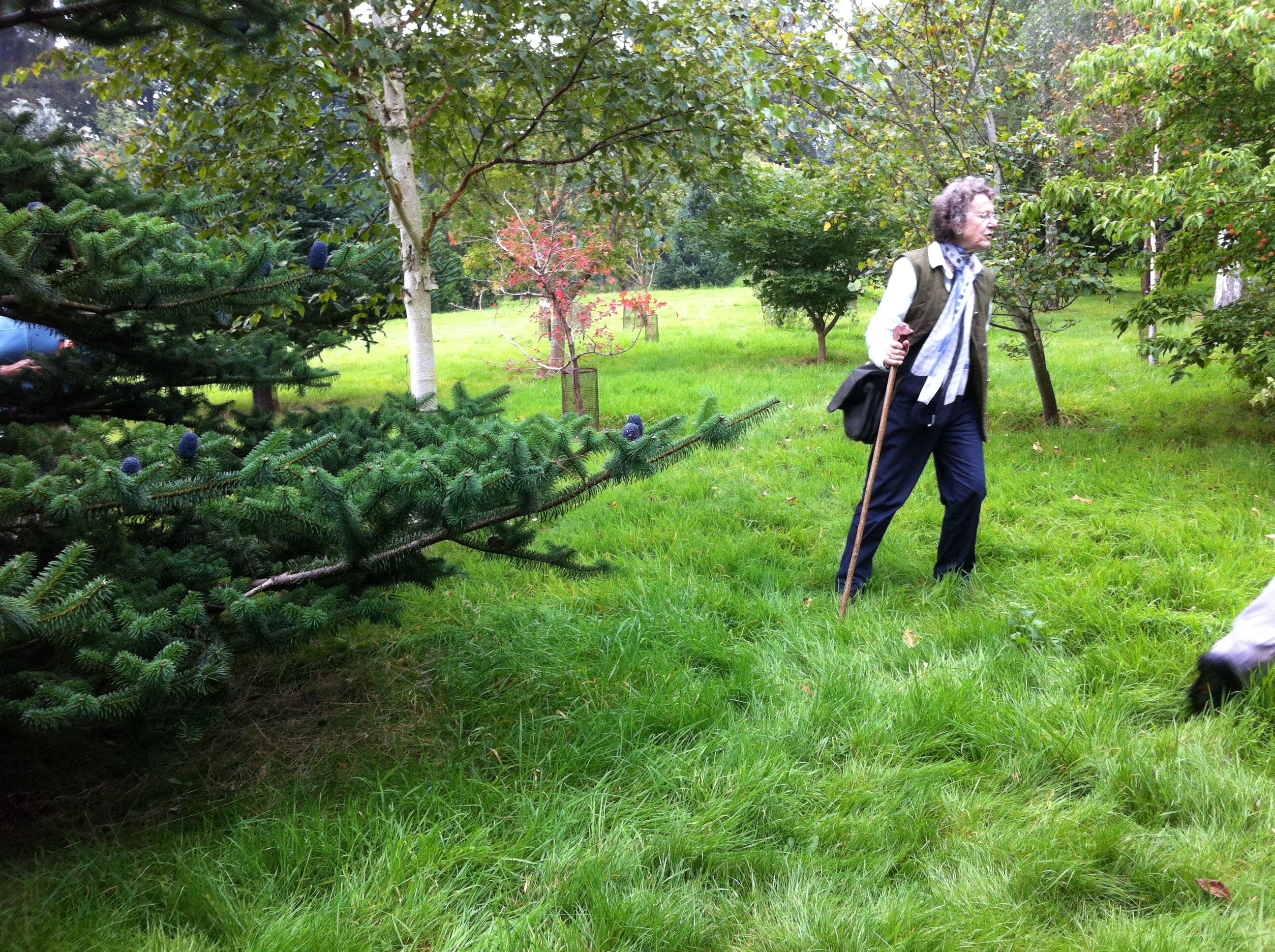
It’s the Kington Walking Festival and Elizabeth Banks, ex president of the Royal Horticultural Society (probably the UK’s most authoritative gardening society, which organizes the yearly Chelsea Flower Show), lead a tour today around the impressive collection of trees at her family home, Hergest Croft.

It was a walk back into the late 19th century, an era of adventure, when archeologists were busy unearthing unsuspected treasures in Egypt and Greece, geologists busy digging and botanists were risking their lives to collect and bring back unknown specimens of plants and trees from places as far afield as China and South America. Liz’ husband Lawrence’s grand father, William Banks, bought several plants brought back from China by Ernest Wilson in the late 1800s. Wilson worked for a nursery called Veitch, which employed several Chinese plant hunters. Wilson’s journey to China in 1899 was rather poignant as he was expressly asked by Veitch to bring back a ‘davidia involucrata’ (a dove tree named after French missionary and keen naturalist Armand David, who lived in China in the 19th century and incidentally was the first Westerner to see a giant panda). Wilson’s trip included a stop at the Harvard Arboretum in Boston, before arriving in China in full Boxer Revolution, being arrested as a spy, capsizing in a boat crossing, until he finally got to the very rare ‘davidia’, only to find it had only just recently been cut down.

He consoled himself by bringing back over 300 species of plants not yet known in England.

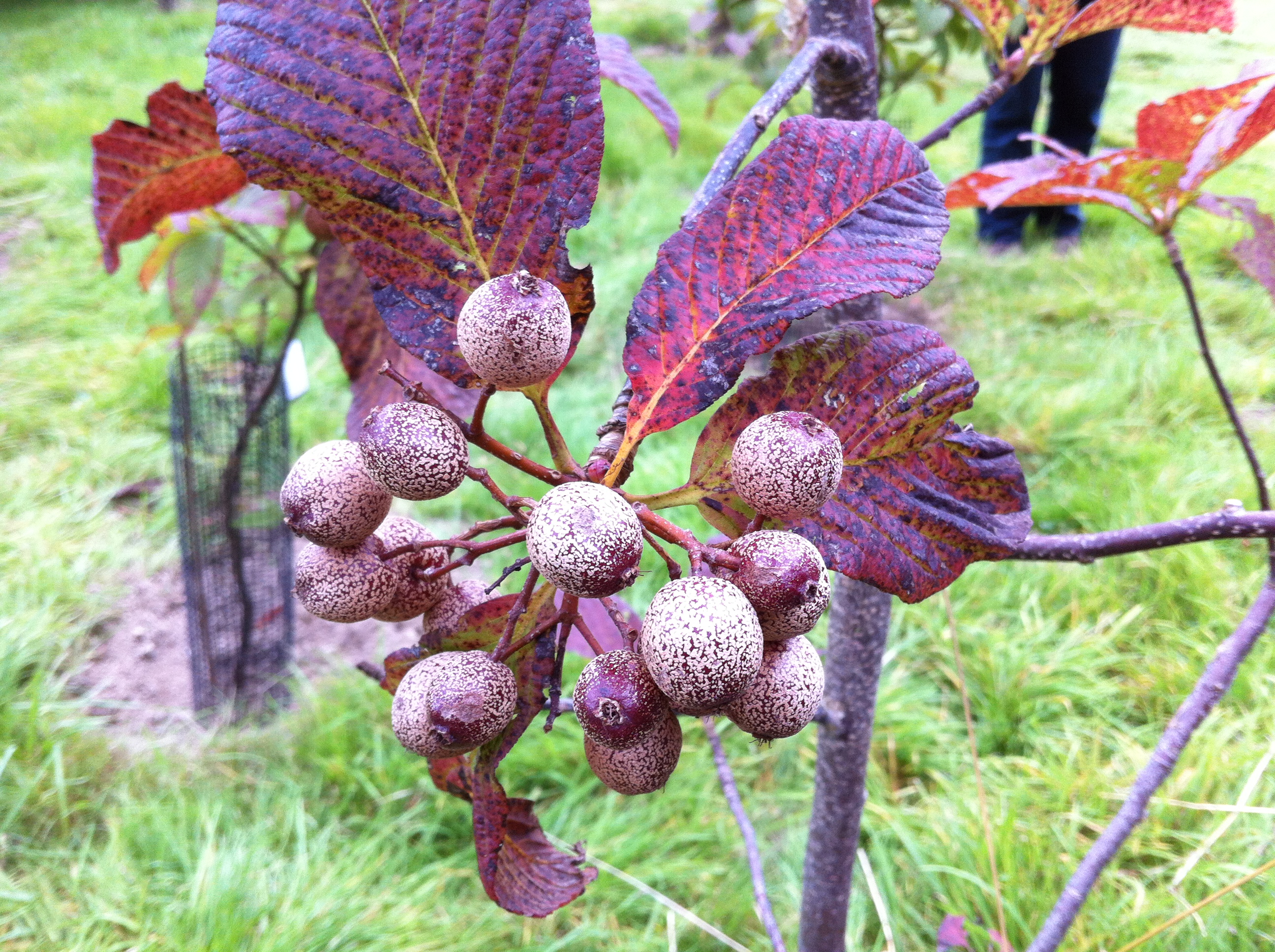
The walk was punctuated by a litany of evocative Latin names such as ‘tormentum’, ‘tortuosa’, spinosa’. Trees are clustered by family, the oaks, birches, the beeches, the limes, the  old rhododendrons with amazing bark…

It was a time when one upmanship was about having gardens with the most species, the rarest ones, the biggest trees. Liz and her husband Lawrence are both very keen plant experts, they travel extensively to bring back rare specimens, following in the footsteps of Lawrence’s ancestors, and I can’t help smiling when she explains with pride that they have 90 ‘champion trees’ (trees which are particularly large in height or width), more than Kew or Westonbirt!

IMG_3625

Liz Banks marches ahead.

IMG_3627 IMG_3628 IMG_3636