When I was a student in France and practicing interviews to get into business school, I was drilled by an older student who had already got into business school and exuded the self confidence of someone who doesn’t realise he knows very little. He asked me why I wanted to work “en entreprise” – for a company-, and what kind of company. I answered I’d want to work for a company with a soul, with a clear purpose. He stared at me as if I said “I want to be a flower girl”, then proceeded to explain that wasn’t the kind of thing to say to get into business.
So I was very happy and relieved when I recently read “Conscious Capitalism” by John Mackey, founder and CEO of Wholefoods, where he explains companies have obligations to all their stakeholders – staff, suppliers, customer, local authority (taxes and compliance…), central authority (axes and compliance), neighbours, the environment…-, not just their shareholders, and that while making money is a condition to be sustainable, it isn’t the purpose of a company, that there should be a vision that serves the greater good. Whole Foods sells high quality organic food throughout the US, its products are expensive, but then maybe quality is better than quantity, and suppliers get properly paid for their produce. It employs 91,000 people, and had a turn over of US$15bn in 2016.
Capitalism has made such a bad name for itself, fingers have been pointed at it for being the cause of greed, excess consumption, pollution, reckless destruction of the environment. Yet many entrepreneurs have made invaluable contributions to our quality of life. Ford and Volkswagen wanted to build cars for the people, to enable everyone, not just the monied, to be able to go to the countryside on week-ends with their families and have more independence.
Apple wants to help people connect, and every Apple technical person I’ve spoken with lives and breathes that idea, they know the product, they’re enthusiastic about it and have spent hours on the phone with me trying to solve problems.
Check out any company that is appreciated by its staff, suppliers, customers, and you’ll usually find behind it a clear vision, usually led by an individual who has formulated that vision. Sell that company to a corporation who only sees ways to sell it on at a higher price, or to maximize profit, and you’re likely to lose the vision, and the ability to adapt to a changing environment while keeping your eye on the company’s higher purpose (which isn’t to make money).
Unfortunately John Mackey has done just that and put himself in a situation where he has been pressured by a new investor to sell out to Amazon just last week. It’s a lucrative operation for the shareholders, Whole Foods sold for US$13.7bn, but it will be interesting to see if the company will manage to keep is commitments to top quality food and respect for suppliers and customers.
The Body Shop grew and thrived on Anita Roddick’s desire to produce skin care products with a social and environmental awareness, and when she sold it to L’Oreal in 2006, she said it would be a Trojan horse, and would help make changes from within the large multinational company. L’Oreal did stop testing on animals in 2013, but Body Shop seems to have lost its way, and profits have dived.
It is ironical that someone considered as the father of capitalism, the Scottish philosopher and economist Adam Smith, wrote about sympathy (which we can understand as the present day ‘empathy’), and humans’ need to look after each other, in “The theory of moral sentiments”, yet he is often quoted as a source to explain why the well being of employees, customers and suppliers should be sacrificed in favour of maximizing profits for shareholders. Have his ideas been hijacked and reinterpreted to justify privileging shareholders over other stakeholders?
It is a fact difficult to contest that most companies can serve a higher purpose. Construction companies can build safe and comfortable houses for us to build homes. Clothing companies can make our bodies warm and possibly even beautiful. Cosmetic companies can help our skin be healthy. Cement plans can give us the material needed to build our houses, etc, etc.
Even banks – those companies so vilified in the press because of high bosses being paid large bonuses sometimes at the tax payers’ expense – serve an important purpose: enabling you and I to set up our own business and grow it.
When the Bangladesh based Grameen Bank started giving loans to impoverished women in the 1970ies instead of giving them money, it was considered immoral – how were they supposed to ever pay it back, and worse still at an interest rate of up to 18%?!- It’s only when it turned out they did pay back, and thrived on the businesses they started, and had a much better pay back rate than the fat cats who had contacts with senior managers of commercial banks, that the world of development realized how powerful people’s sense of entrepeneurship was. They just needed to be given half a chance and a tiny bit of capital.
So why this niggling feeling that companies’ intentions are impure, that they’re in it just for the money, and will take shortcuts when it comes to the staff, the customers’, the suppliers’ interest. Because often, they are.
There seems to be a worship of shareholders in board rooms, and maximizing their profit. Nothing matters but the bottom line. How sad and boring. Money is way over-rated. It makes life easier, but it’s the other things that make life fun and interesting and worth living: creating a family, a wider community, fighting to build something that benefits many people.
Also, if and when all stakeholders are aligned on one vision, staff, suppliers, customers, shareholders, that’s when everyone becomes really creative, and the sum of the parts becomes a lot more than everyone taken individually. Also, it’s easier to ask for sacrifices when times get tough, if every member of staff, every supplier, every customer, feels they’re in it together, and will benefit together when things improve. Instead of having a polarization between management and workers, with strikes and everyone trying to take the better of the other party.
It is a shame that often staff are considered a ‘necessary evil’ (true quote from a CEO), and any suggestion to make their working lives more rewarding, or to give customers a bit more for their buck is considered suspiciously, as if there was a risk of becoming too sentimental, and the company collapsing from being too kind to everyone.
I’d argue the opposite is true. If your working partners (staff, client, suppliers, local authorities, neighbours, etc…) are dedicated to your mission mind, heart and soul, there is no limit to what can be achieved. I’ll define heart and soul here, I don’t want it to come across as some hippy talk disconnected from reality.
Work done with heart means it is conducted with empathy for everyone involved, as well as for the environment. There is a clear sense that the company has a purpose, but also that many different parties need to be taken into account and not suffer from the work done towards that purpose. A ‘conscious’ company is a guardian of the environment, fights wastage and excess packaging, instead of being a threat to nature and its natural processes.
Work done with soul means there is a sense of a bigger picture, a knowledge that the company helps improve lives, in whatever way (it can be as mundane but crucial as emptying sewage tanks), and that the job gives satisfaction in itself, regardless of the pay.
So it is a welcome development in my mind that there is a change in thinking from companies being tools to make money for shareholders to them fulfilling a much bigger and more interesting role in society.
The movement “Conscious capitalism” around the world is a place for entrepreneurs to share these ideas and further them.
In France I just heard the term “entreprises à mission” – enterprises with a mission-.
I was talking with a friend fund manager about social enterprises – enterprises with a clear social benefit-. She countered that she hoped every company she invested in was socially aware, and helped better the lives of its staff and every other party involved-.
After all, companies are agents in our society to provide goods and services we need. Just like an organism needs healthy organs to sustain it, so we need healthy companies to listen to the needs of society (real needs, not made up ones), and fulfill them.



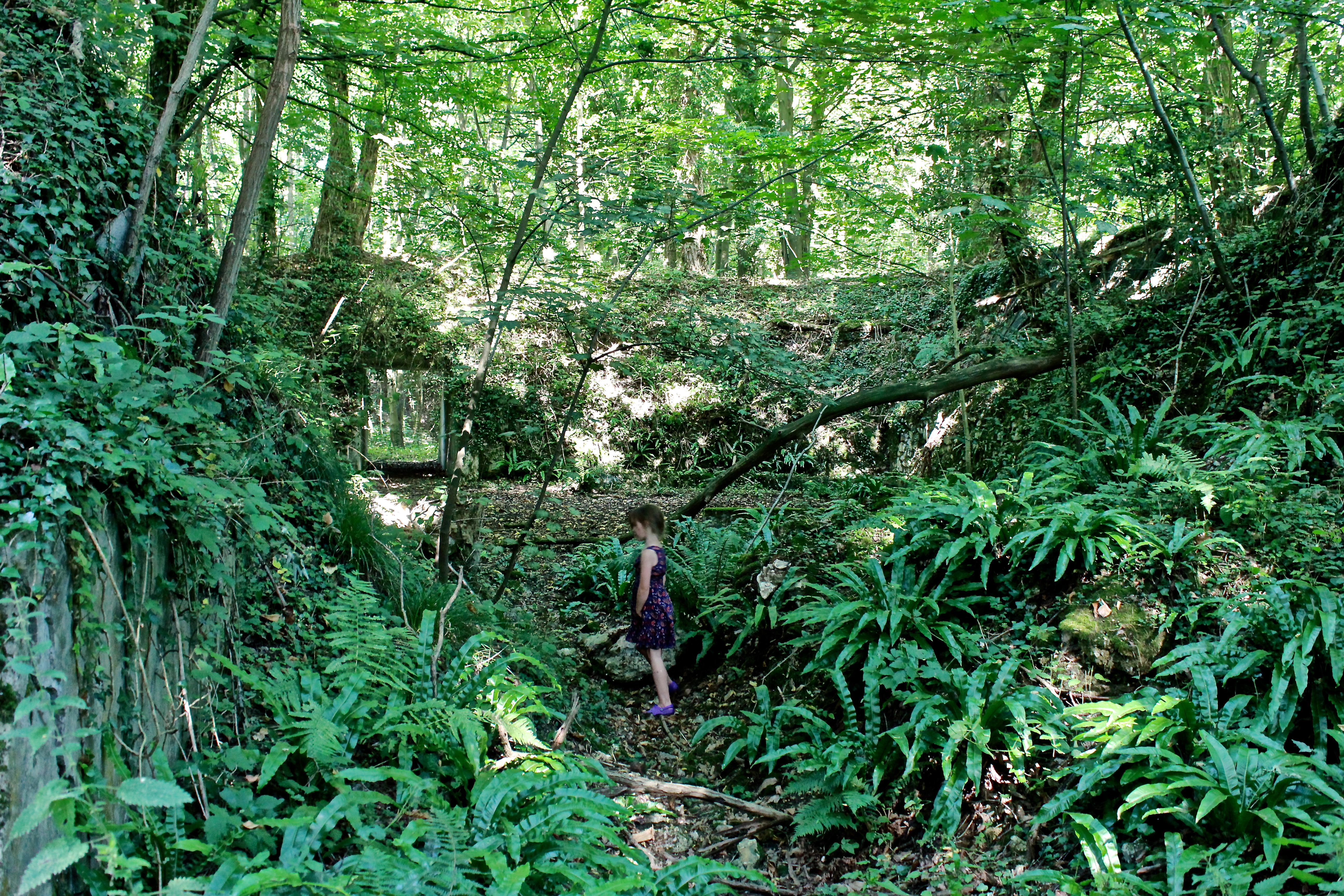
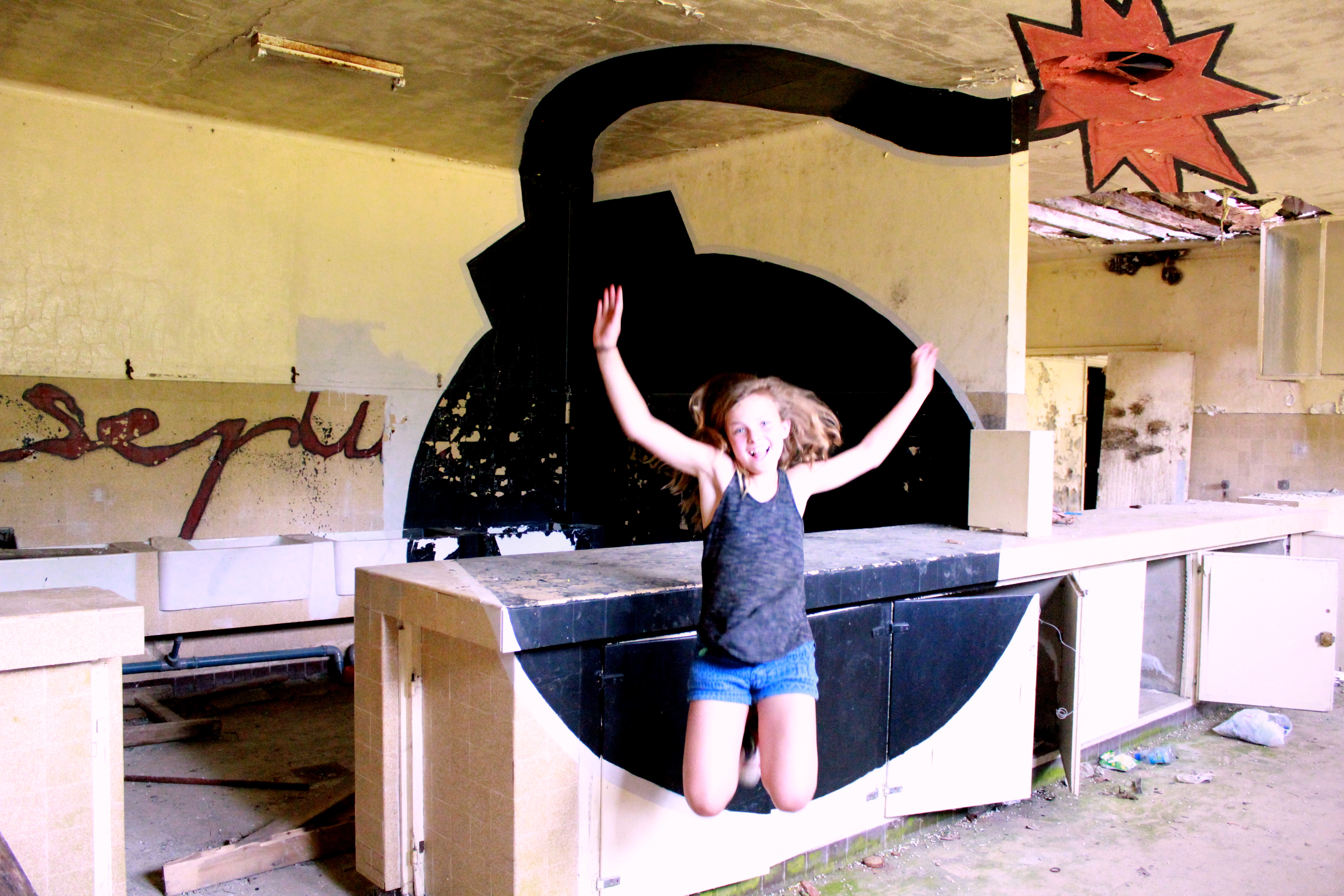
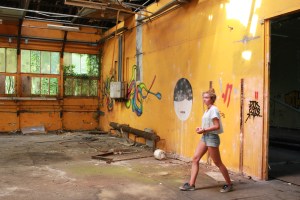 At breakfast time on March 3, 1988, a workshop exploded in the Nobel Bozel dynamite factory where my father worked as maintenance engineer, killing five people, all the top executives except my father, who by some miraculous chance had forgotten some papers and was out of the workshop when it happened. My brother and I, his wife and our daughters went to visit the factory last Sunday. The gates had been closed for 27 years, and somehow have been broken open a few weeks ago. It was like entering Sleeping Beauty’s castle, completely overgrown with lilac and birch trees growing out of roofs and windows. Incredible graffitis covered the walls. The Nobel company must have decided the cost of decontaminating the land was more than the real estate value and will have forgotten it as an unproductive asset in their books. A guy in military clothes walked out of the derelict office building when we passed the gates: a paint ball game was under way. They stopped it while we walked around, in wonder. We finished with the office, where we found papers in my father’s name, and signed by him, left undisturbed for nearly 30 years… My father never really spoke about the explosion, the shock of losing his colleagues and having to recognise the bits of body and assist the enquiry must have been a heavy burden. He also had to go out and find another job at age 50 (as the factory was closed), but being the strong person he was, he moved on. Without really discussing it, we had always assumed it had been criminal: an explosion had killed three workers three years earlier, and there was an uncomfortable atmosphere between workers and the executives, fueled by some virulent communist propaganda, where the “patronat” (employers) was accused of putting people’s lives in danger in the name of profit. Death threats against my father and his colleagues had been issued several times. Considering how staunchly socialist my father always was and how he cared for everyone working at the factory, it must have been mortifying. What we have started to realise only recently is how dangerous the process of making dynamite was, these factories don’t exist any more, the ingredients for making dynamite are now assembled only when it needs to be used to limit the risk of untimely explosion. The real miracle is that there were no more accidents. So maybe it wasn’t criminal after all. There was nothing left after the explosion, so very few clues anyway, and little desire from any party to spend more time investigating further. What is left is a strange world of wild flowers and jungle, broken roofs, and a human fauna of paint ballers and scavengers. Cf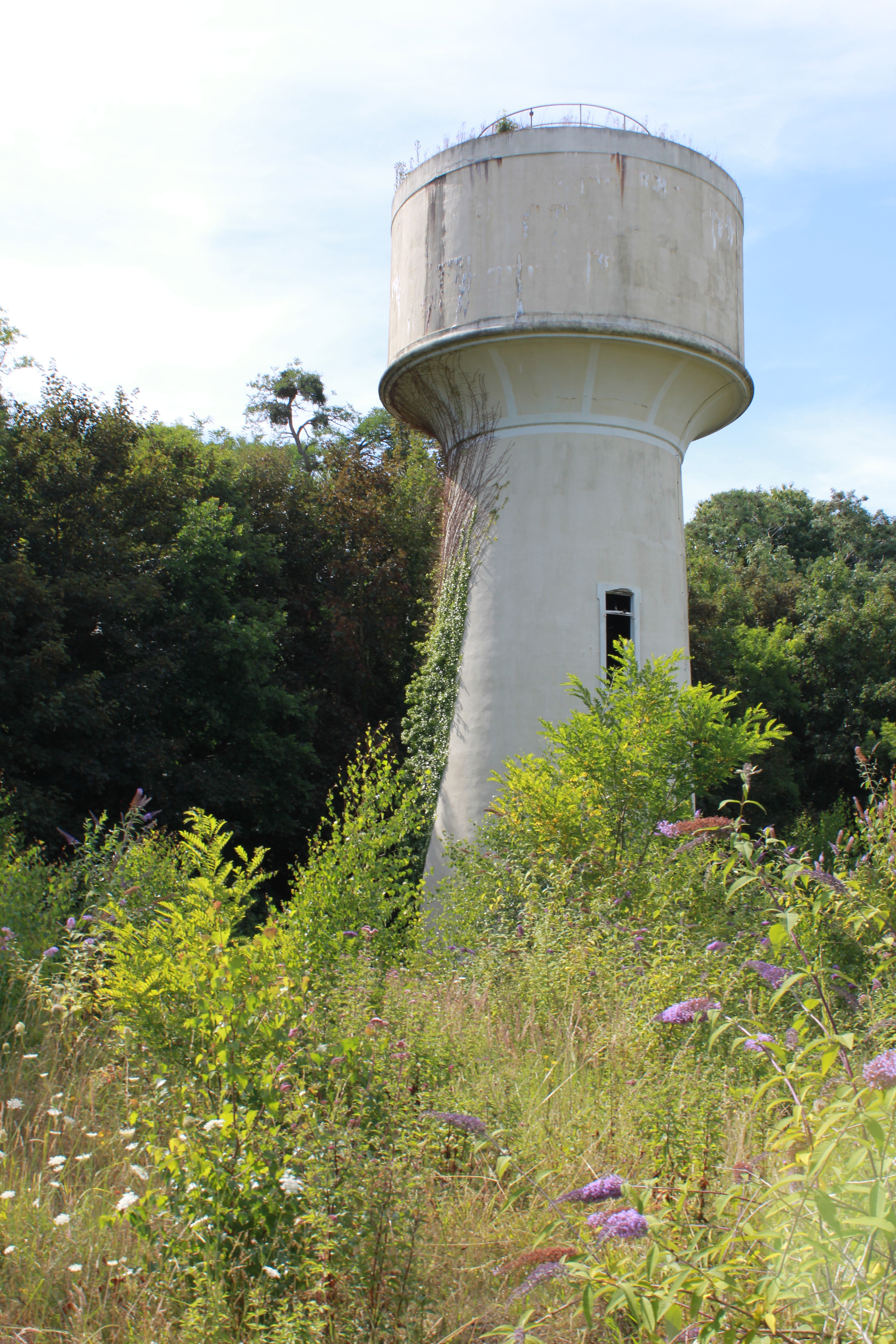











 jennydaneels